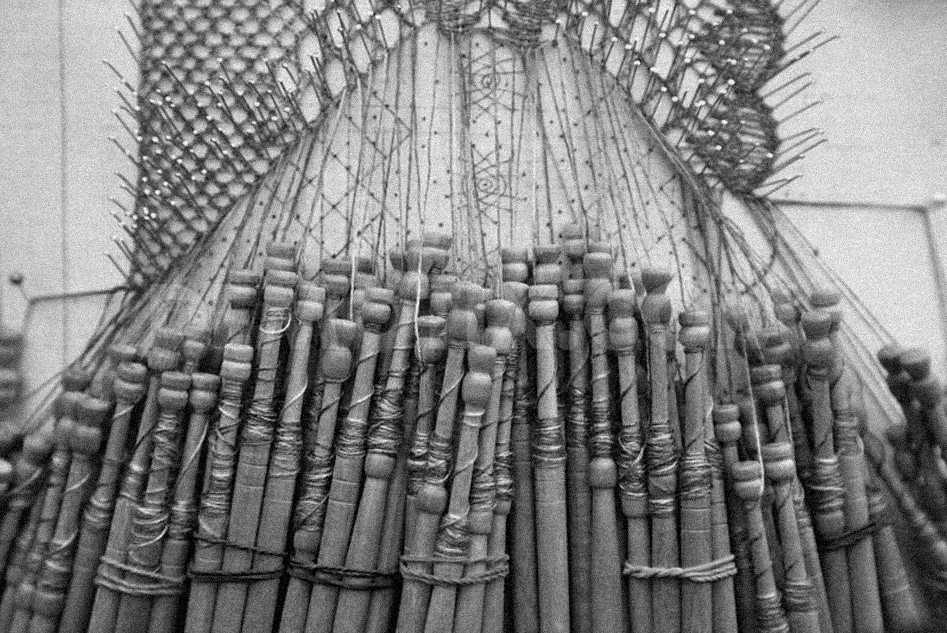
- 2026 Tourner collection -
Memory weaving ”Shadow”
As we research various lace techniques, EUCHRONIA encounters the customs, traditions, and folk costumes rooted in different countries and villages.
By layering these discoveries with the emotions of each moment, we create a central character for each collection and design our garments by imagining their way of life. For the 2026 Croiser and 2026 Tourner seasons, we have established a year-long theme that focuses on the duality of light and shadow inherent in lace.
By layering these discoveries with the emotions of each moment, we create a central character for each collection and design our garments by imagining their way of life. For the 2026 Croiser and 2026 Tourner seasons, we have established a year-long theme that focuses on the duality of light and shadow inherent in lace.
EUCHRONIAは、さまざまなレース技法をリサーチする中で、各国や村に根付く風習や伝統、民族衣装に出会います。
そうした発見に、その時々の感情を重ね合わせながら、コレクションごとに中心となる人物像を描き、その人の暮らしを想像しながら服作りを行っています。2026 Croiser と 2026 Tournerではレースの併せ持つ光と影の二面性にフォーカスした通年のテーマを設けています。
そうした発見に、その時々の感情を重ね合わせながら、コレクションごとに中心となる人物像を描き、その人の暮らしを想像しながら服作りを行っています。2026 Croiser と 2026 Tournerではレースの併せ持つ光と影の二面性にフォーカスした通年のテーマを設けています。
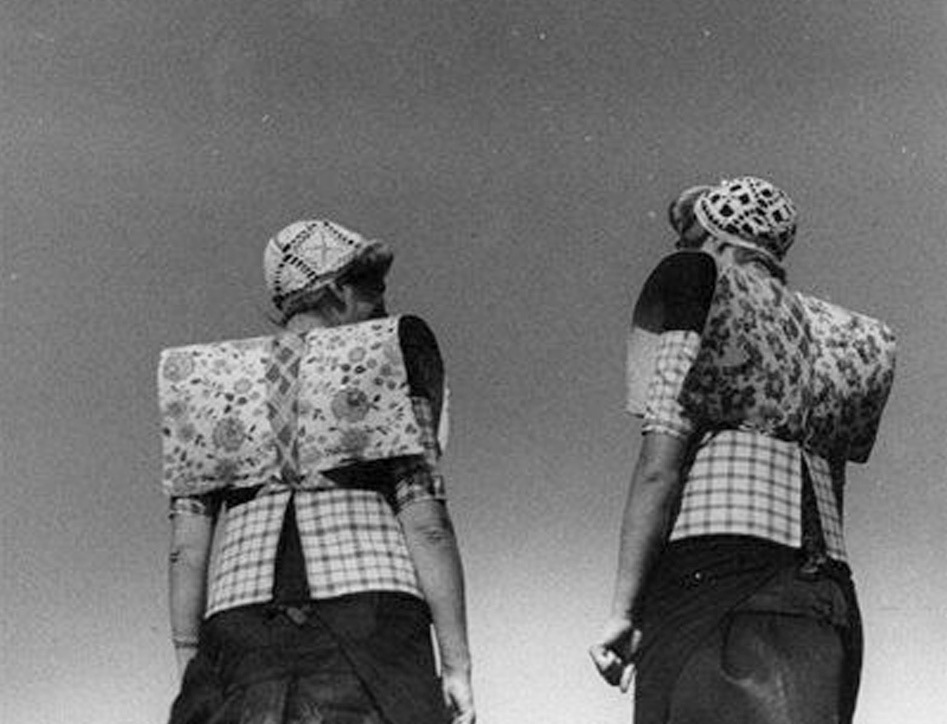
This season as well, we created a fictional protagonist from an imaginary village inspired by Staphorst, a village in the Netherlands.
The village is a solemn place that values modesty, with strict rules governing dress and appearance.
The village is a solemn place that values modesty, with strict rules governing dress and appearance.
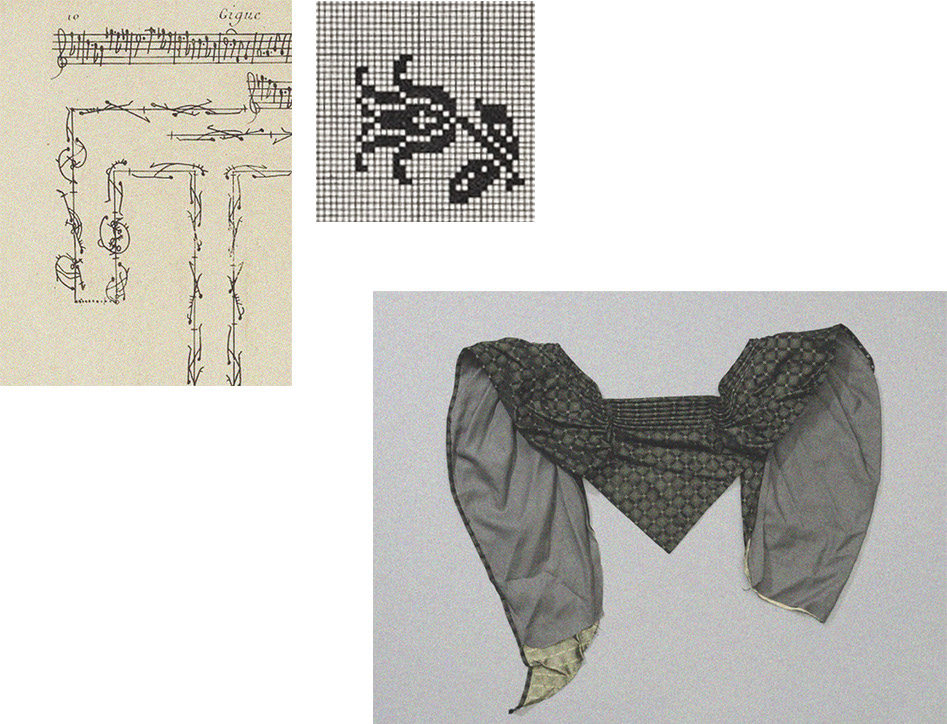
In this village, there is a custom of recording daily memories by punching sounds into music box punch cards, instead of writing them in a diary.
Once a month, the villagers gather and dance freely to the sounds of the music boxes they have created. It is the only day when they can truly enjoy themselves without concern for being seen by others.
Once a month, the villagers gather and dance freely to the sounds of the music boxes they have created. It is the only day when they can truly enjoy themselves without concern for being seen by others.
The muse for this season is a woman who was born in this village and later moved to the city, where she has lived through many years of her life.
Rooted in the customs of her hometown, dancing has remained central to her life. Through leaving her village and experiencing many things in the city, she becomes aware of the various dualities that exist in life—such as the coexistence of love and anxiety, or beauty and unease.
Rooted in the customs of her hometown, dancing has remained central to her life. Through leaving her village and experiencing many things in the city, she becomes aware of the various dualities that exist in life—such as the coexistence of love and anxiety, or beauty and unease.
She herself embodies these contrasts, carrying both a sense of nostalgic attachment to her hometown and a modern, urban sensibility within her.
今季も、オランダの村・スタッフォルストに着想を得た、架空の村出身の主人公像を作りました。
その村は慎み深さを重んじ、服装や外見にまで厳しい規律がある、厳粛な場所です。
その村は慎み深さを重んじ、服装や外見にまで厳しい規律がある、厳粛な場所です。
この村には、一日の記憶を日記に綴る代わりに、オルゴールのパンチカードに音を打ち込むことで記録するという風習があります。
月に一度、村人たちはそれぞれが作ったオルゴールの音に合わせて集い、自由に踊ります。それは、他人の目を気にすることなく、心から楽しむことができる唯一の日です。
月に一度、村人たちはそれぞれが作ったオルゴールの音に合わせて集い、自由に踊ります。それは、他人の目を気にすることなく、心から楽しむことができる唯一の日です。
今季のイメージは、そんな村から都会へ移り住み、長い年月を生きてきた女性がミューズ。故郷の習慣から、彼女の人生において、踊ることが彼女の人生の中心。故郷から都会に出て様々なことを経験した事で、人生における様々な「二面性」気づきます。
愛と不安の同居や、美しさと不穏さの共存など。彼女自身も故郷的なノスタルジックさと、都会的なモダンさを併せ持っています。
愛と不安の同居や、美しさと不穏さの共存など。彼女自身も故郷的なノスタルジックさと、都会的なモダンさを併せ持っています。
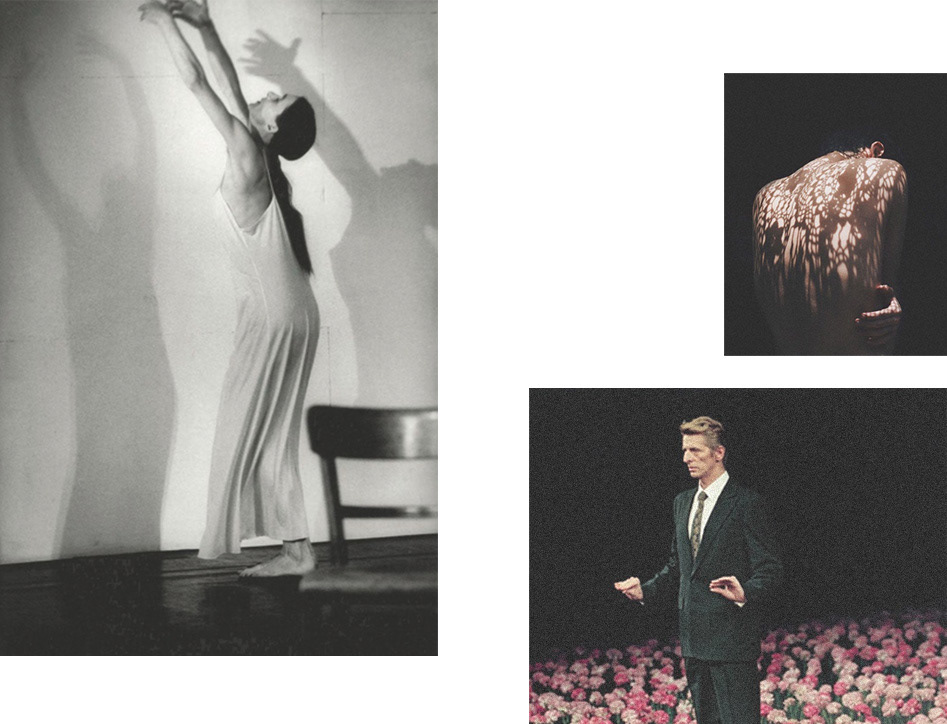
- 2026 Croiser collection -
Memory weaving ”Light”
As we research various lace techniques, EUCHRONIA encounters the customs, traditions, and folk costumes rooted in different countries and villages.
By layering these discoveries with the emotions of each moment, we create a central character for each collection and design our garments by imagining their way of life. For the 2026 Croiser and 2026 Tourner seasons, we have established a year-long theme that focuses on the duality of light and shadow inherent in lace.
By layering these discoveries with the emotions of each moment, we create a central character for each collection and design our garments by imagining their way of life. For the 2026 Croiser and 2026 Tourner seasons, we have established a year-long theme that focuses on the duality of light and shadow inherent in lace.
EUCHRONIAは、さまざまなレース技法をリサーチする中で、各国や村に根付く風習や伝統、民族衣装に出会います。
そうした発見に、その時々の感情を重ね合わせながら、コレクションごとに中心となる人物像を描き、その人の暮らしを想像しながら服作りを行っています。2026 Croiser と 2026 Tournerではレースの併せ持つ光と影の二面性にフォーカスした通年のテーマを設けています。
そうした発見に、その時々の感情を重ね合わせながら、コレクションごとに中心となる人物像を描き、その人の暮らしを想像しながら服作りを行っています。2026 Croiser と 2026 Tournerではレースの併せ持つ光と影の二面性にフォーカスした通年のテーマを設けています。
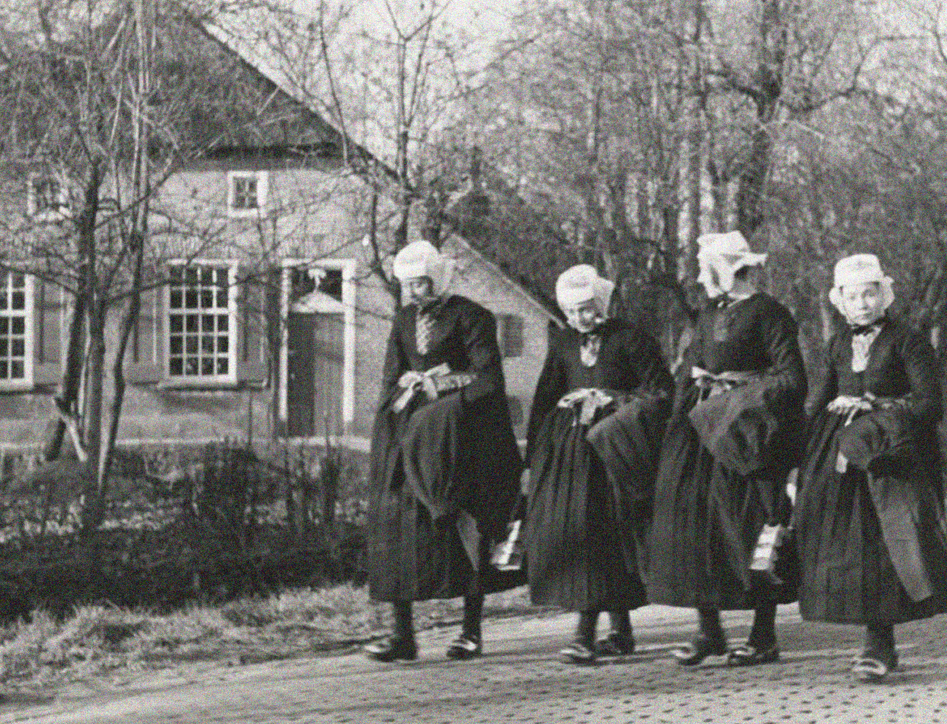
This season, we created a fictional protagonist from an imaginary village inspired by Staphorst, a village in the Netherlands. It is a solemn village that values modesty, with strict rules governing dress and appearance.
In this village, there is a custom of recording memories by punching sounds into music box punch cards—much like typing the day’s memories into a diary. Once a month, the entire village gathers and dances freely to the sounds of the music boxes they have created. It is the only day when the villagers can truly enjoy themselves without concern for being seen by others.
The image for this season is a young woman who has recently moved from this village to the city—someone gradually absorbing urban sensibilities, yet still carrying traces of their hometown within them.
今季は、オランダの村・スタッフォルストに着想を得た、架空の村出身の主人公像を作りました。
その村は慎み深さを重んじ、服装や外見にまで厳しい規律がある、厳粛な場所です。
その村は慎み深さを重んじ、服装や外見にまで厳しい規律がある、厳粛な場所です。
この村には、一日の記憶を日記に綴る代わりに、オルゴールのパンチカードに音を打ち込むことで記録するという風習があります。
月に一度、村人たちはそれぞれが作ったオルゴールの音に合わせて集い、自由に踊ります。それは、他人の目を気にすることなく、心から楽しむことができる唯一の日です。
月に一度、村人たちはそれぞれが作ったオルゴールの音に合わせて集い、自由に踊ります。それは、他人の目を気にすることなく、心から楽しむことができる唯一の日です。
今季のイメージは、そんな村から最近都会へ移り住んだ、若い女性がミューズ。
都会の感覚を少しずつ身につけながらも、心のどこかに故郷の面影を残している存在を描いています。
都会の感覚を少しずつ身につけながらも、心のどこかに故郷の面影を残している存在を描いています。
- About our sustainability -
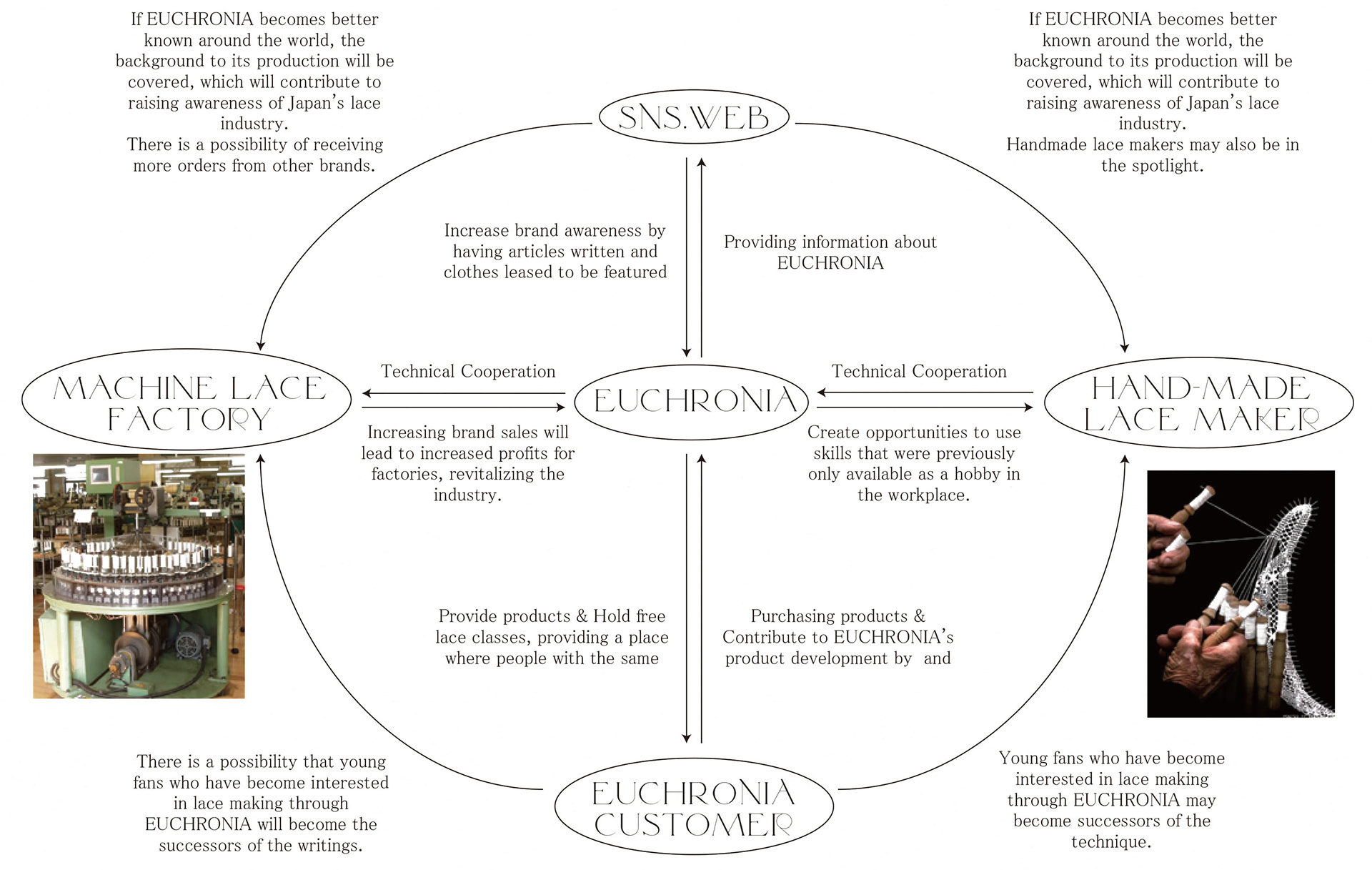
In the machine-made lace industry, the lack of successors and declining demand have led to the closure of highly skilled factories.
At the same time, in the world of traditional handmade lace—especially bobbin lace—Japan is known for having a large number of people who practice it as a hobby, with a notably high level of technical skill. However, because lace-making is extremely time-consuming, many practitioners are elderly, and globally there is a serious lack of younger generations to carry on these techniques. We see this as a major issue facing the lace industry today.
At the same time, in the world of traditional handmade lace—especially bobbin lace—Japan is known for having a large number of people who practice it as a hobby, with a notably high level of technical skill. However, because lace-making is extremely time-consuming, many practitioners are elderly, and globally there is a serious lack of younger generations to carry on these techniques. We see this as a major issue facing the lace industry today.
EUCHRONIA works in collaboration with highly skilled lace factories in Japan as well as bobbin lace makers to bring Japanese lace techniques to the world as a lacewear brand. Through the creation of our collections, we aim to build a sustainable cycle that not only showcases lace garments, but also inspires interest in the craft of lace-making itself.
機械レースの市場において、継ぎ手の不在と需要の減少で、高い技術力をもった工場がなくなってしまったり、伝統的なハンドメイドレースで有名なボビンレースにおいて、日本人は趣味として行っている人口が多く、技術力も高いと言われていますが、作るのに時間がかかることから、行っている方たちが高齢者ばかりで世界的に見ても若年層で技術の継ぎ手がいないということがレース産業の問題だと感じております。 EUCHRONIAは国内の高い技術力を持っているレース工場と、ボビンレースのレースメイカー達と力を合わせて、レースウェアのブランドとして世界へ日本のレース技術を発信し、レース作り自体に興味を持ってもらえるような循環を作るための活動を、コレクション作成を通じて行っていきます。
- About our lace activity -
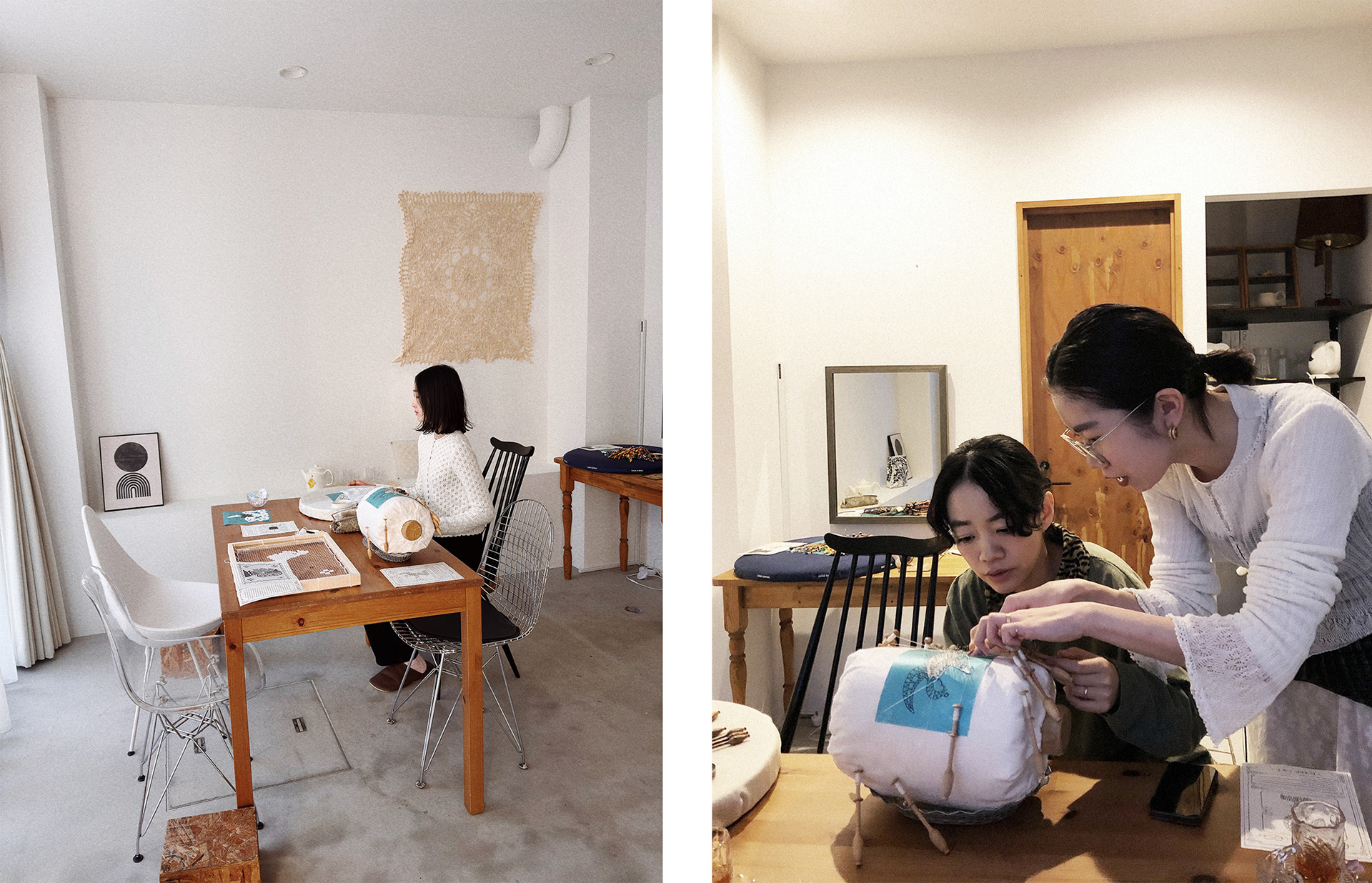
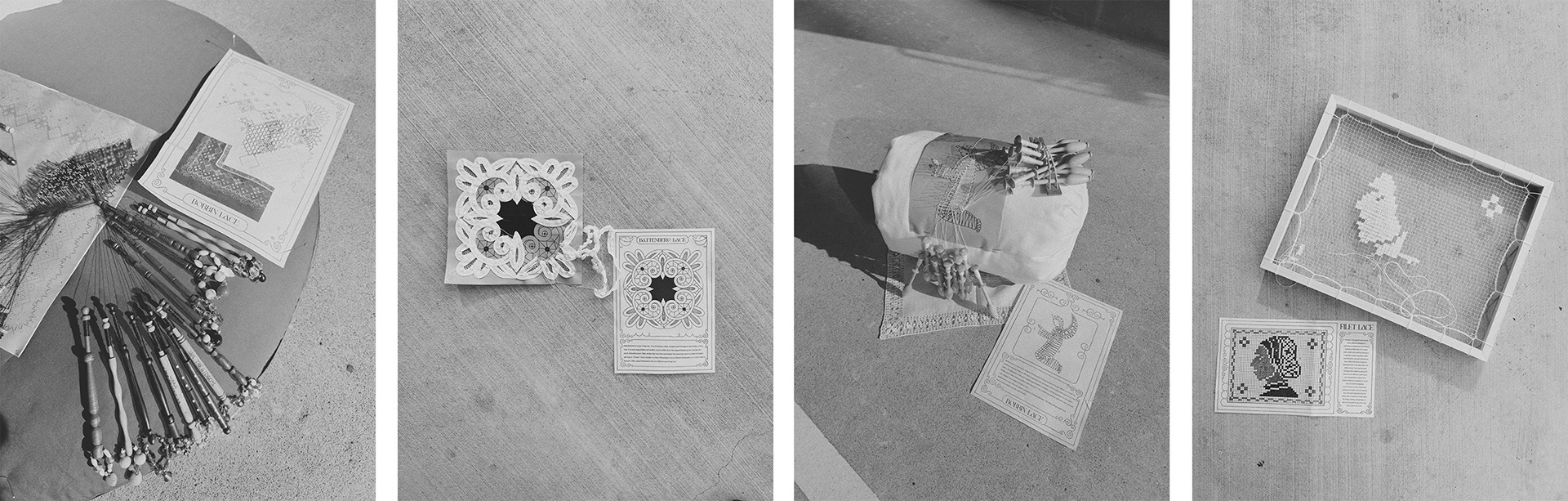
To convey the beauty of handmade lace-making, we plan to hold lace workshops on a regular basis.
Our approach to craftsmanship is deeply influenced not only by lace itself, but also by the artisans who create it and the history behind it.
For those who purchase EUCHRONIA products, we are preparing a program in which the garment tag can be exchanged for a lace-making experience.
We would be delighted if EUCHRONIA could become a starting point for people to develop an interest not only in lace garments, but also in the process of lace-making and its history.
We would be delighted if EUCHRONIA could become a starting point for people to develop an interest not only in lace garments, but also in the process of lace-making and its history.
手で作るレース作りの魅力を伝えるために、今後定期的にレース教室を行います。 私たちはレースだけでなく、レースの作り手達やレースの歴史に私たちのモノづくりにおいてとても影響をうけています。
こういったレース作りをEUCHRONIAの商品を買って下さった方へは、下げ札を引換券にして体験して頂けるように準備をしております。私たちがきっかけとなり、レースの服だけでなく、レース作りや歴史などにも興味を持ってもらえたら嬉しいです。
The story behind this initiative
About five years ago, we began attending a bobbin lace class where around fifteen students would gather at the teacher’s home. Everyone worked quietly on their delicate lace, while the soft clattering sound of bobbins echoed throughout the room. The space itself was beautiful, filled with old lace books and treasured materials.
While our hands were constantly moving, our ears and mouths were free. We laughed together, chatting about museums we had enjoyed recently, delicious food we had eaten on our travels, and exchanging sweets we had brought with us, all while steadily weaving lace.
Later, when we visited lace workshops in Belgium, the UK, and Italy, we discovered a very different style of lace-making from that in Japan. Rather than being taught by a single instructor, these gatherings felt more like circles of people who simply loved lace-making—helping one another when questions arose. Everyone created what they liked, in their own way, often customizing their tools to suit their personal preferences. The atmosphere was relaxed and unhurried, and we were deeply drawn to the freedom and joy with which lace-making was enjoyed.
Through these experiences, we began to long for a space where people could naturally gather around lace—a place formed by shared curiosity and passion. We started to dream of creating such an environment ourselves someday.
Handcrafts are often associated with a warm, cozy image, but the tools used in lace-making—from patterns to bobbins—are truly beautiful objects in their own right. We hope lace-making can be embraced as a fashionable hobby.
Just as people go out to see a film or visit a museum, we imagine adding “going out to make lace” as a new way to spend time—not at home, but in a shared space. A place where people with similar tastes can connect, create, and enjoy the process together.
この活動を行うきっかけとなったエピソード
5年ほど前からボビンレースの教室には、 先生のお家に生徒さんが15人くらい集まって、みんな黙々と繊細なレースを作ってて、ボビンの音がカラカラ部屋中に響いてて、素敵なレースの古本などもあるとても素敵な空間です。
そして、みんな手は動かしながらも、その間耳と口は暇なので、ケラケラ笑いながら、最近行って良かった美術館の話や、旅行先で食べた美味しい物の話とかをしたり、 持って来たお菓子をみんなで交換して食べながら、レースを織り進めています。
ベルギーやイギリスやイタリアのレースの教室に行った際、日本とは違うスタイルでレース教室が開催されている事を知りました。
誰か1人の先生が教えるのではなく、レース作りが好きな人達がお互いのわからない所を教え合うサークルみたいな空間。
好きな物を好きなように作れるし、レース作りの道具も自分が好きなようにカスタムしてたり、日本のお教室より、マイペースにレース作りを楽しんでる雰囲気がとても素敵でした。
これらの経験を機に、 レースを中心に集まった人達でできてる素敵な空間に憧れを抱いて、いつか自分達でもこうゆう環境を作りたいと思うようになりました。
手芸ってほっこりとしたイメージがありますが、レース作りで使う道具は、図案をはじめ、本当に素敵なものばかりで、私たちはファッショナブルな趣味として普及していってほしいと考えています。 映画見に行くとか、美術館に行くみたいな遊び方に新しく加えるように、家の中じゃなく、お出かけして手芸をしに行くが加わったら、同じようなものが好きな人とも繋がったりできて楽しそうだなと思っています。
---------------------------------------------
- About "CROISER" and "TOURNER" -
We aim to make clothes that people who love lace can wear all year round instead of making clothes that are tailored to the seasons and trends, as is common in the fashion industry.
For that reason, we release our products twice a year, but instead of calling them "Spring/Summer" and "Fall/Winter", we will use the words "CROISER" and "TOURNER"
Lace makers weave beautiful lace by repeating the hand movements croiser (to cross) and torne (to turn).
We hope to repeat croiser and torne throughout our collections, so that we can weave beautiful lace along with the brand's history.
私たちはファッション業界で当たり前となっている季節やトレンドに合わせたものづくりではなく、レースが好きな人達が一年中着れるような服づくりを心がけてます。
そのため一年に2回発表をしますが、SSやAWという言い方ではなく、"CROISER"と"TOURNER"という言葉を使います。
レースメーカー達は、croiser(交差させる)、tourner(向きを変える)という手の動作を繰り返すことで美しいレースを織っていきます。
私達もコレクションを通してcroiserとtournerを繰り返すことでブランドの歴史と共に美しいレースを織り上げていけたらと願ってます。